
Hollywood Offices™ Go-to Guide to Short-Term Office Space for the 2028 Olympics
Workspace solutions for international media, broadcast, and streaming teams in Los Angeles
Los Angeles will host the world in 2028, not just athletes but the people who tell the story of the Games. Broadcasters, streaming platforms, production companies, podcast teams, and digital creators will all need a base of operations in Los Angeles. For most of them, their workspace will not just be an office. It will be their newsroom, control center, writers’ room, interview set, and client meeting space.
That means one thing.
HOLLYWOOD OFFICES™ will team with international Olympic participant countries, their team organizers, newscasters, and story tellers who will need a full spectrum of workspace including administrative offices and production-ready space, not just empty square footage.
Today Hollywood’s office model no longer runs on conventional long-term timelines. Recent economic factors have heavily impacted the need for “just-in-time and mostly budget-driven” workspace. Writers’ rooms have been compacted from nearly 12-month terms to barely 20-week terms. Seasons get greenlit overnight with the need for next-day occupancy.
And when the Olympic flame reaches Los Angeles, more than 25,000 media professionals will be looking for space that works the way they do: fast, connected, secure, flexible, and close to where deals, stories, and talent actually are.
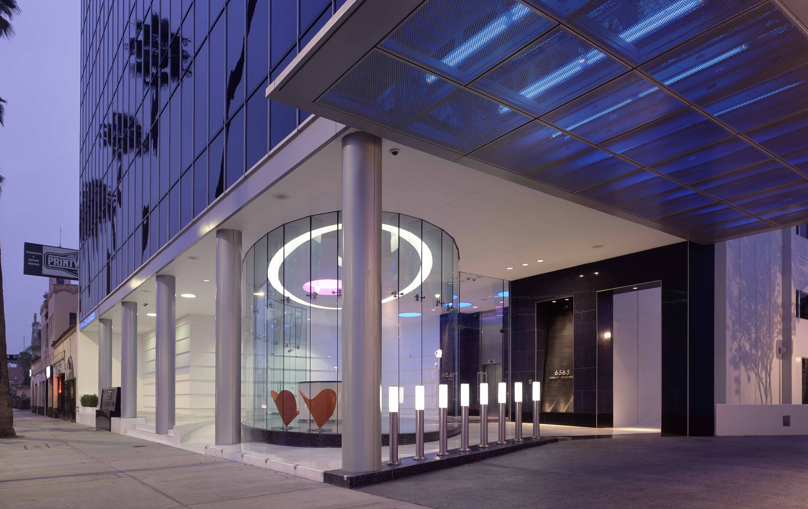
Where HOLLYWOOD OFFICES™ Fits In
We are not a coworking chain or a brokerage platform. We own our buildings, including our flagship location at 6464 Sunset Boulevard in the heart of Hollywood, and we manage every detail in-house. Every space is built for the way modern production actually works.
This guide explains:
- What media and broadcast teams should plan for ahead of the 2028 Games
- Why most will choose Hollywood over Downtown Los Angeles or temporary stadium setups
- How short-term production space works, and how our buildings already support it
- What to expect in terms of timing, technical needs, insurance, and leasing
What Media Teams Actually Need (Beyond Empty Offices)
You don’t have time to build an office. When you land in Los Angeles, you need a space that already functions like a studio.
For media and broadcast teams covering the Olympics, that means:
- Space that works on day one. Not a shell. Not an empty floor. A room where your team can walk in, open a laptop, plug in a hard drive, and start producing.
- Writers’ rooms and production offices configured for actual workflows. Not shared desks, but enclosed rooms where writers, producers, and editors can work without interruptions or sound bleed.
- Real infrastructure, not just furniture. Fiber internet, secure networks, power redundancy, AV ports, private conference rooms that convert into interview sets, and lockable space for equipment.
- Short-term leases that match the life cycle of a show or a broadcast assignment. Month-to-month, quarterly, or based on a production cycle. No multi-year contract, no corporate approval delays.
This is the difference between “office space” and a working production environment. During the Olympics, that difference will decide whether your team hits its deadlines or spends the first week trying to build a workspace from scratch.
Fully Furnished and Ready to Work
A working production office is more than four walls and a floor. Your team should be able to walk in and get to work immediately.
That is why our offices include:
- Private executive offices and writers’ rooms that are already furnished
- Desks, seating, tables, and storage set up for production teams and support staff
- Conference rooms and lounges that convert easily into interview sets or control rooms
- Lockable rooms for scripts, equipment, legal work, or confidential content
- Neutral design that can be branded, rearranged, or adapted for on-camera use
You are not renting square footage. You are stepping into a workspace that lets your team start writing, editing, producing, or broadcasting the same day you move in.
Built for Cameras, Editing, and Live Production
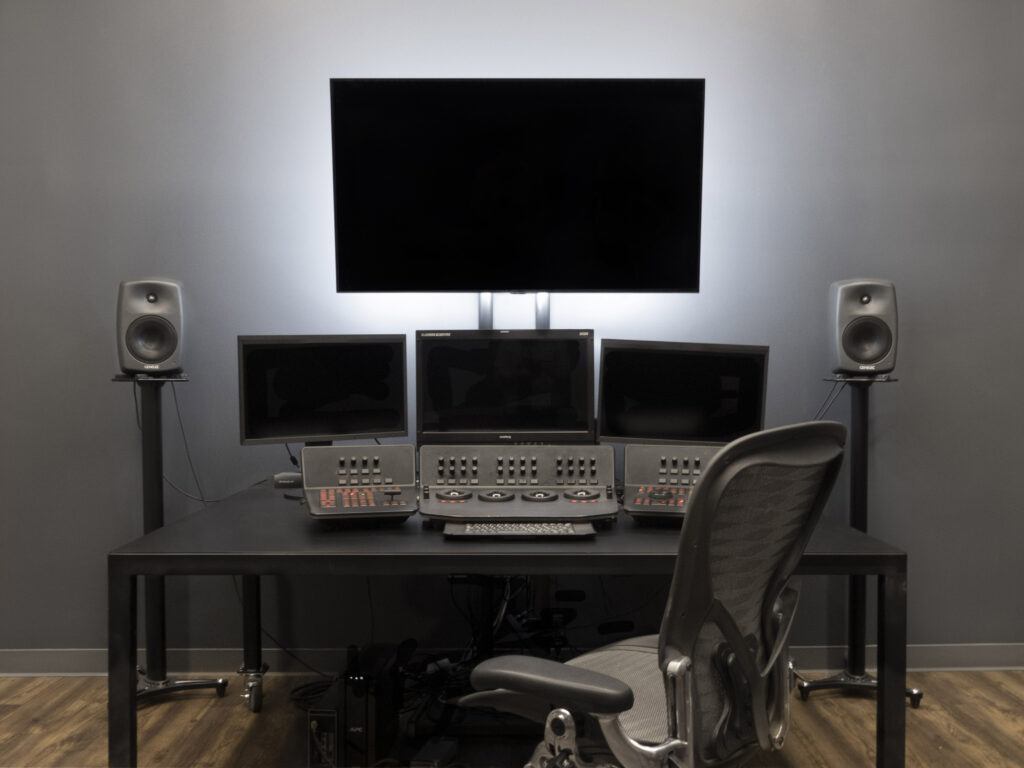
A production office is not just desks and Wi-Fi. It must support cameras, lighting, sound, editing equipment, client monitors, and secure data transfer. That is why our suites are pre-wired with fiber internet, high-capacity power access, and AV-ready connections. Conference rooms and private offices can be adapted into interview sets, control rooms, or post-production bays without construction or delay. Teams bring their gear, plug in, and start creating.
How We Support Production, Broadcast, and Streaming Teams
We built our spaces for people who do not have time to wait for construction, landlords, or legal departments. When a production gets a greenlight, a writers’ room opens, or a network sends a crew to Los Angeles, the space must be ready.
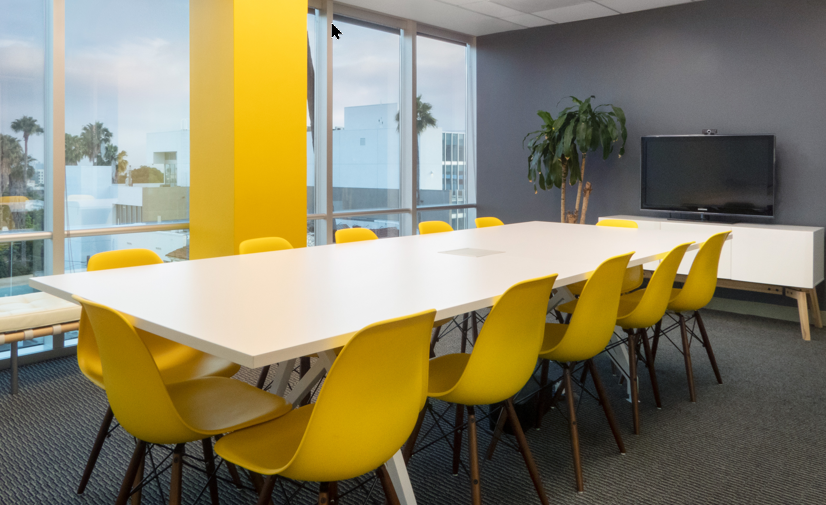
Here is how we work:
- Privately owned buildings. We do not broker space. We own it. That means you are working directly with decision-makers, not a leasing chain or corporate office in another state. If a writers’ room needs to open Monday (after touring the space the Friday (day) before), we can make that decision internally.
- Production-ready layouts. Our campuses include furnished offices, writers’ rooms, post-production bays, conference rooms, and private suites that can be used as control rooms or interview sets. Teams can move in and begin work the same day.
- Short-term, production-cycle leases. Month-to-month, quarterly, or tied to a production schedule. No five-year contracts. No corporate legal review that takes weeks or months. Leases are tailored to the industry it serves—we understand what production needs.
- High-speed fiber internet and secure network infrastructure. Uploading dailies, streaming live, or sending footage to New York, London, across the pond, or around the world, requires more than Wi-Fi. Our buildings include fiber connectivity, redundant power, secured access, and 24/7 entry.
- Trusted by major studio and network teams and industry professionals. HOLLYWOOD OFFICES™ works with all major Studio and Television Networks, production companies, writers’ rooms, entertainment attorneys, publishers, and media teams who need privacy, flexibility, and compliance with studio insurance and risk departments. Our current and past clients include:

Netflix, HBO, Endemol, MTV, Warner Brother, FX, River Thames/BBC, Paramount Pictures, 20th Television, New Line Cinema, HULU, Fabel Entertainment, Walt Disney Television, Viacom, Bold Films, STARZ, Stalwart Films, AMC, MUSE VFX, Women In Film, Annapurna, Amazon Studios, Universal, Picrow, Blumhouse, Gaumont, AMC, CBS television Studios, Magical Elves, eOne, Apple TV, SONY, MGM.
Why Hollywood Is the Right Base for Olympic Media Teams
Most media crews will not base themselves in Downtown Los Angeles or next to stadiums. They need to be close to where stories, talent, production vendors, and decision-makers actually are. That is Hollywood.
Working from Hollywood puts your team within minutes of:
- Major studios and production houses
Paramount, Netflix, Sunset Gower, Hollywood Center Studios, and dozens of independent stages and post facilities.
- Talent agencies, writers, and showrunners
In a typical Olympic cycle, story development, interviews, and late-night rewrites happen faster than transportation allows. Being in Hollywood keeps your team close to the people who make decisions.
- Post-production, sound, and finishing teams
Editors, colorists, audio engineers, and VFX teams are concentrated in this area. That reduces time lost in transit and makes last-minute adjustments possible.
- Legal, insurance, and entertainment risk departments
Most productions require studio insurance, clearance, and documentation before a single camera rolls. Our buildings already meet requirements that legal and risk teams look for.
- Restaurants, hotels, and production services
Crews, clients, and talent have access to a myriad of close-proximity brand-new hotels, catering, transportation, furniture rental, equipment suppliers, and after-hours services. Nearby restaurants include well-known Mother Wolf, Iki-Nori, Superba and Providence. Nearby hotels include W-Hotel, Thompson (luxury brand of Hyatt), Dream, and Marriott.
Proximity Equals Production Time
Operating from Hollywood cuts down on travel hours, delays, and logistical breakdowns. During the Olympics, that time becomes even more valuable, especially when teams are balancing live coverage, digital content, interviews, and next-day production.
Most major broadcasters and streaming platforms begin securing production space 18 to 24 months before an event. For the 2028 Games, that means space in Hollywood will begin locking up in 2026. Not for marketing broadcasts, but for writers’ rooms, media headquarters, and live digital coverage teams who need months to prepare their workflows, insurance, and technical setups.
24/7 Access, Parking, and On-Site Operations Support
Olympic coverage does not happen between 9 and 5. Crews work early mornings, late nights, and across time zones. That requires secure buildings with controlled access, on-site parking, freight elevators, and the ability to load in equipment without disruption.
Hollywood Offices is built around that reality. Tenants receive 24/7 access, on-site parking options, secure mail, and equipment delivery, and building teams who understand production timelines, not corporate office hours.
Planning Ahead for 2028
The media teams that succeed during the Olympics will be the ones that plan early. Not for airtime, but for where their work will happen. A production office is no longer just an address. It is the center of writing, editing, coordination, and live content. If it does not function on day one, the work does not happen.
We built our spaces for that reality.
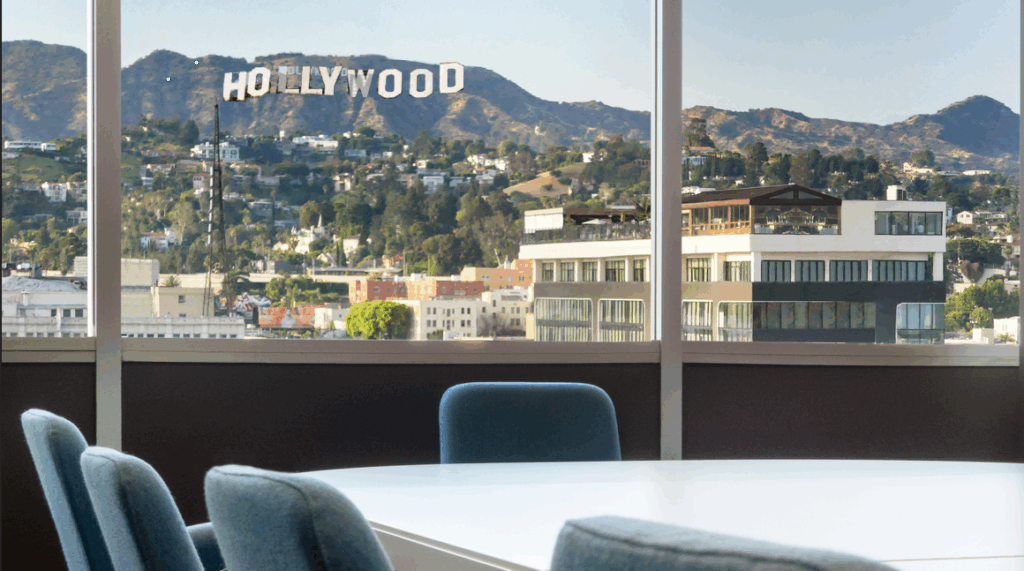
Writers’ rooms, editors, producers, attorneys, and streaming teams already work from our buildings for the same reason Olympic crews will. They need a place that understands how Hollywood works now, not how it worked ten years ago.
If your team is preparing for the 2028 Games and you want to see how production-ready space in Hollywood actually works, we are available to walk you through it.
Frequently Asked Questions About Olympic Media Office Space
1. When should media teams reserve offices for the 2028 Olympics?
Most production companies and broadcasters will secure space 18–24 months before the Games. Booking by mid-2026 ensures availability, time for set-up, insurance approvals, and technical customization.
2. Can HOLLYWOOD OFFICES™ accommodate full production teams, writers’ rooms, or multiple departments?
Yes. Teams can lease individual offices or combine multiple suites to create production compounds with writers’ rooms, editing bays, legal offices, and client lounges.
3. Are the offices fully furnished?
Yes. All suites come with desks, seating, storage, conference tables, and layouts designed for production workflows. Teams can move in and start working immediately without waiting on furniture delivery or installation crews.
4. Is the space equipped for live streaming and post-production?
All buildings include fiber internet, redundant power, sound-treated rooms, lockable storage, and AV-ready infrastructure. Many teams use the suites for editing, live streaming, table reads, and interview setups.
5. How flexible are the leases?
Leases can be month-to-month, quarterly, or aligned with a production budget and schedule. There are no multi-year contracts and no corporate delays that stall move-in dates.